日本語版の記事はこちら
Since August 2022, Sony Acceleration Platform has collaborated with Sony Innovation Fund (SIF), which invests in and supports startups developing innovative technologies, business models, products, and services. The series highlights SIF portfolio companies and the innovations they are bringing to the market.
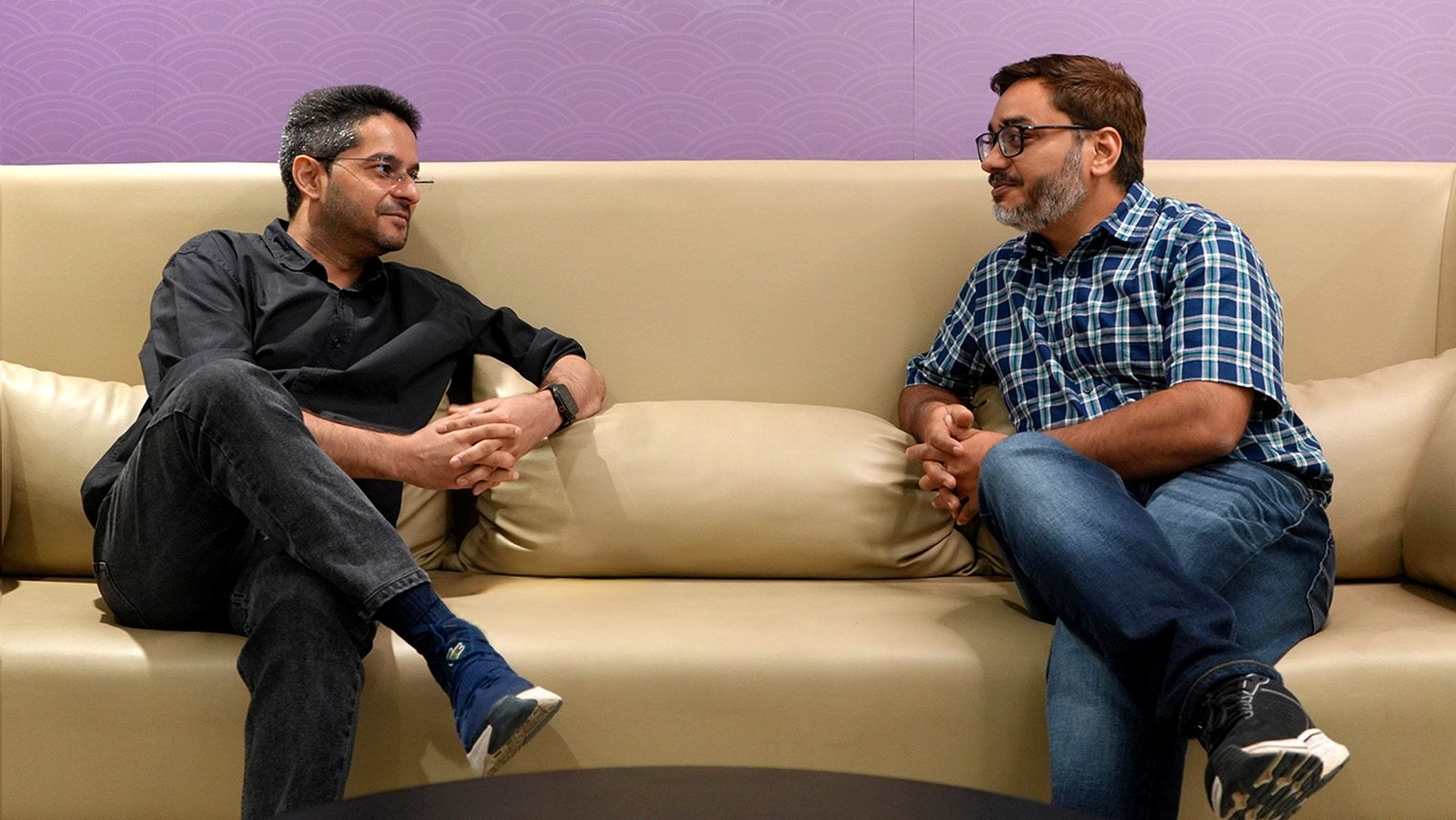
This article highlights a roundtable discussion featuring Vishal Chopra, Co-founder and CEO, and Himanshu Gupta, Co-founder and Chief AI Officer, of Wortgage Technologies Private Limited (hereinafter “WeRize”), an Indian fintech company that combines cutting-edge AI with trusted local networks to expand access to financial services across smaller towns across India. Joining them are Yoko Fukata, Director/Head of Sony Ventures India, and Namita Raichura, Senior Investment Manager, at Sony Ventures Corporation.

India’s 300 million middle class remains underserved by financial services
―― To begin with, could you tell us about WeRize's business overview?
Chopra: We are a fintech company built around what we call a "social distribution" model. By combining our proprietary AI platform with a network of local freelance sales partners, we provide personal loans, insurance, and investment products to India's middle-class who have historically suffered from limited access to financial services.
―― Why do you focus on India's middle class?
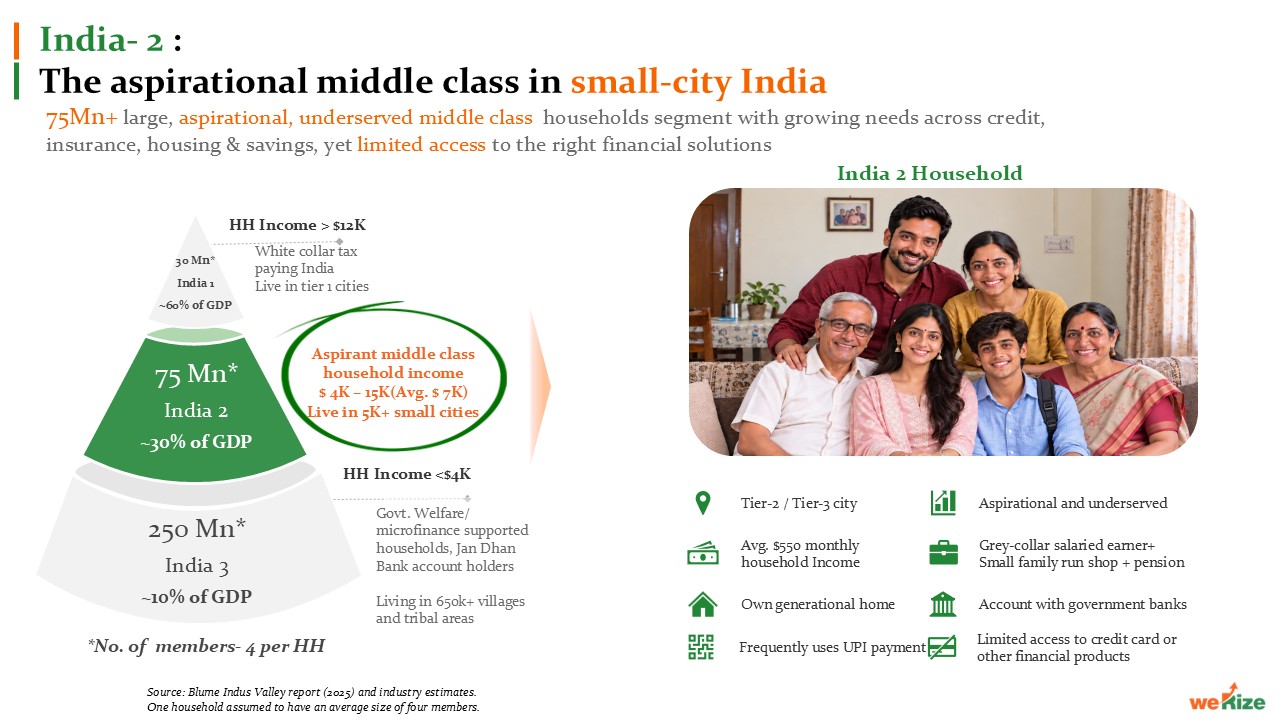
Chopra: We broadly divide Indian consumers into three groups. "India 1" refers to the top 5-7% of the population by income and wealth. Although relatively small, this group accounts for around 60-70% of India's GDP, and its economic size is comparable to that of countries such as UK or France.
"India 2" is the country’s growing middle class, consisting of about 300 million people. This includes skilled workers, service sector employees, small business owners, and self-employed professionals, living in approximately 5,000 provincial cities and towns across India.
And "India 3" represents the lowest-income segment of the population.
India 1 is already well served by banks and financial institutions, while India 3 benefits from a range of government support programs. On the other hand, India 2, often falls between the two. They are not wealthy enough to be a priority for private banks, mutual funds or insurance companies, and their income is not low enough to benefit from government support. While many people in this segment already have bank accounts, they only have limited access to unsecured loans, mortgages, credit cards, insurance, or investment products.
Gupta: Beyond the market opportunity, my own experience strongly influenced our decision to focus on this middle class. I grew up in one of India’s most financially underserved regions. My father was a public servant , and our family was considered middle class by local standards. Even so, my parents were unable to get loans for my education or for medical expenses. When our house needed repairs, accessing credit was also a challenge.
The roughly 300 million people we call India 2, which represent those just below the top 5-7% of the population (India 1) are by no means poor. Yet they struggle because they lack access to appropriate financial services.
WeRize can help them choose the right financial products, so that they can feel more secure and confident in their lives.
At the end of the day, people want the same things: a good education for their children, financial stability, and the ability to plan for the future. Yet for the past 75 years, banks have not been able to cater to this segment. I wanted to help solve that problem by broadening access to financial services.
―― Why did this issue arise in India?
Chopra: Over the past 15 years, India has changed dramatically. With the spread of Aadhaar, nearly all of the country’s 1.4 billion citizens now have a biometric ID and access to a bank account. However, access to financial products such as investments, insurance, and credit remains concentrated to the top 5-7% of the population (what we call India 1). The reason is very simple: traditional financial institutions only have limited presence in small and mid-sized cities where much of India 2 lives. Expanding branch networks into these markets tends to be economically unviable. As a result, while many people have bank accounts, they are typically held with public-sector banks that only provide basic banking services.
Gupta: As a result, when India 2 households need access to credit, many turn to informal lenders. Those tend to carry no insurance coverage , leaving families vulnerable to unexpected events such as illness or accidents. When it comes to building wealth, many people buy physical gold. Others are drawn to local investment schemes that promise high returns and sometimes end up falling victim to fraud or scams.
Existing fintech companies have struggled to reach this segment as well, because India 2 consumers remain reluctant to purchase complex financial products entirely online. They want to consult someone they trust, face-to-face, before deciding. There is an enormous gap between existing services and what these users actually need.
A distinctive strategy that fuses the physical and the digital
―― How is WeRize closing that gap?
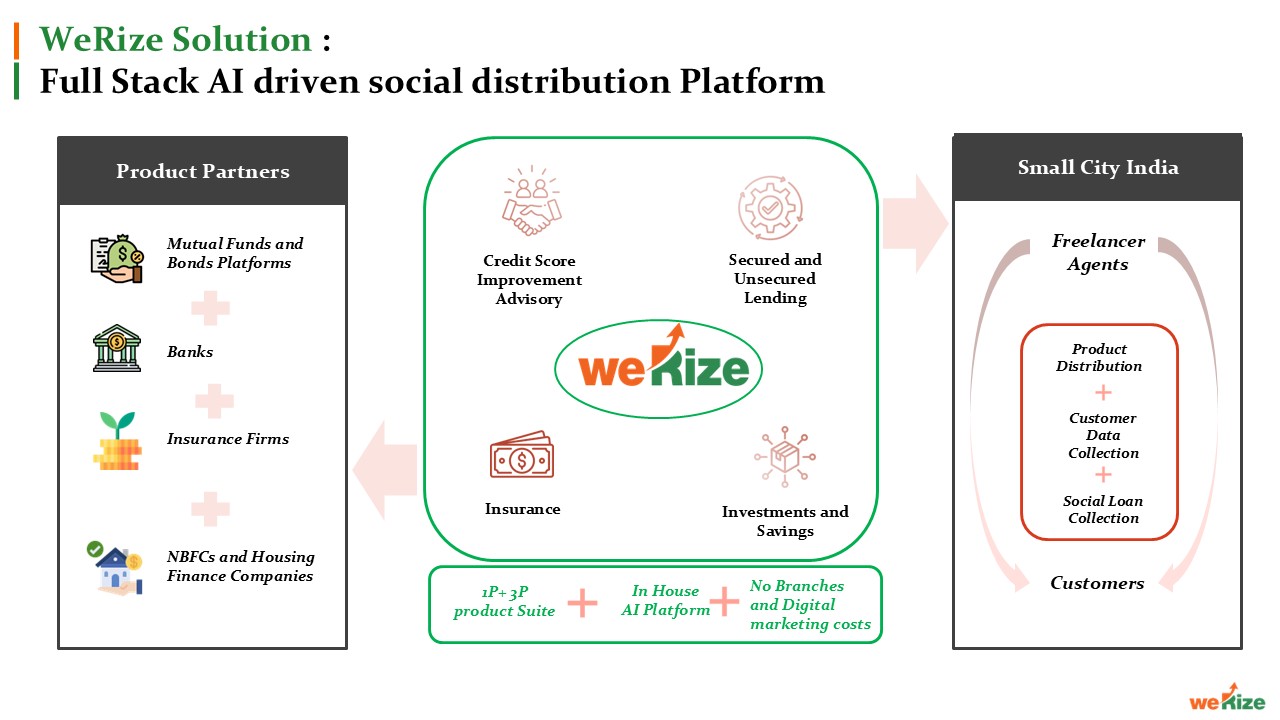
Chopra: We have built a network of about 20,000 freelancers acting as sales partners, such as local insurance agents deeply trusted in their local communities, neighborhood shop owners, and others who are embedded in their neighborhoods. They serve as the face-to-face point of contact, while our in-house AI platform supports everything they do behind the scenes. This fusion of physical (human trust) and digital (technology) is the essence of WeRize, and we call it social distribution, being a network of human relationships rooted in local communities.
What is unique about our model is that we have no sales teams and no branches to manage those 20,000 freelance sales partners. Models that rely on sales partners are not uncommon. Insurance companies in both Japan and India use them as well. However, traditional models typically require dedicated teams to recruit, train, and manage those partners. One Indian insurer employs as many as 200,000 people and operates thousands of branches to support a network of 4 million sales partners.
Indian fintech companies have also attempted similar models, but most added a management layer, making them expensive, and hard to scale. Because we can run in an extremely asset-light way without such management layer, we have been able to turn profitable early on.
―― And it is the AI platform that makes this possible?
Gupta: Yes. The AI platform handles everything, from managing and developing sales partners to supporting the financial products themselves. We built it in-house, using a vast proprietary dataset covering more than 5 million households across 5,000 cities.
For example, when a new sales partner joins, the AI delivers training such as explanations of our
financial products and compliance education. And once customer data is entered, the AI instantly determines an appropriate loan amount and interest rate, as well as recommends suitable insurance plans, while showing the sales partner which products to offer.
For processes that can trigger friction or technical difficulties for those new customers, such as identity verification or direct debit sett-up , the sales partner provides close support with the help of AI, making the process easier for customers.
All those functions also support India's many local languages. By adapting to the language each customer is most comfortable with, the AI removes language barriers from the process as well. With the power of AI, we are turning ordinary sales partners into “super advisors.”
A rock-solid business foundation and two founders who execute
―― What does SIF focus on in WeRize?
Fukata: The first reason is their distinctive approach to capturing the vast, untapped India 2 market of over300 million people. While many fintech companies compete intensely for customers in India 1, WeRize focuses on India 2, where access to financial services remains limited. Operating in smaller
cities comes with significant challenges, but through its own “social distribution” (a network of human relationships rooted in local communities), WeRize can deliver financial services effectively to this enormous target segment.
Raichura: The second reason is their differentiated model, which combines human trust with cutting-edge AI. As we live in an era trying to automate and digitalize everything, trust between people remains a core component that AI can never fully replace, and ultimately becoming the core value of WeRize’s business..
By embedding deeply trusted local sales partners as the face-to-face point of contact, and empowering them with advanced in-house AI technology, WeRize has built a truly hybrid model. We believe this will remain a key differentiator as the business continues to scale.
Fukata: The third reason is the outstanding leadership of the two founders. Both have extensive track records in fintech and other industries, including abroad. Vishal, who has driven the company's rapid growth, and Himanshu, who brings deep expertise in AI and risk management, have very complementary skillsets. We have been particularly impressed by the way they continued to execute and deliver results through challenging periods, including during the COVID-19 pandemic.
We are confident in the team’s execution and remain committed to supporting their further growth.
―― How does SIF assess WeRize's growth to date?
Raichura: We assess growth by looking at the business as a whole. In WeRize's case, we have seen strong growth in revenue, profitability, the scale of its distribution network, and the reach of its platform across India. At the same time, the company has continued to strengthen its credit profile and operating performance. What has stood out to us is the consistency of that progress. WeRize has not only grown rapidly but has also built a profitable business with a clear path for further expansion. The founders have executed well against their plans, which has contributed to further strengthening our confidence in the company.
Fukata: Our single most important criterion is financial return, , as we strive to continue delivering returns to our stakeholders in order to make SIF sustainable in the long run. From that perspective, we had the conviction that WeRize represented an attractive investment opportunity, and the company validated our investment thesis by turning profitable in 2024, just two years after our initial investment.
Since then, the company has continued to strengthen both its profitability and credit standing, including recently obtained a BBB rating. That has further reinforced our conviction, and we look forward to continue supporting WeRize as it pursues its next phase of growth.
From India to emerging markets around the world
―― What are WeRize's goals from here?
Chopra: We have set a clear goal of pursuing an IPO in India within the next two to two and a half years. Over the next two years, we aim to grow revenue by roughly 2x annually and net profit by roughly 3x annually, significantly expanding the business. We anticipate a target valuation of $1 to 1.5 billion at IPO, and we expect to be able to deliver returns of more than 5 to 7 times to our investors.
The financial disparity India faces is shared by the middle classes of emerging economies around the world, including Indonesia, Brazil and several countries across Africa. We plan to take the model we have established in India to other countries, and by the early 2030s we envision a US listing as a company serving emerging markets globally.
Gupta: As entrepreneurs, our top priority is to generate strong financial returns for our investors and our employees. That is why we constantly ask ourselves how we can create greater value.
At the same time, this business provides concrete social significance. We want to help sales partners in smaller cities become micro-entrepreneurs and build sustainable sources of income. Our hope is that our platform increases their income, enables them to reach more consumers, and helps them become trusted advisors within their communities.
Fukata: Our office is located directly across from WeRize's office, so we communicate frequently and provide support whenever needed. Beyond funding, we want to leverage Sony's global network to help create new opportunities for WeRize, particularly in Japan and other international markets. We also intend to facilitate collaboration with Sony's business units and relationship-building with limited partners (LPs) in Japan.
Raichura: Sony also has a strong media and entertainment ecosystem in India. A significant portion of WeRize’s target audience overlaps with the audience that consumes Sony’s content, including Sony LIV, particularly in smaller cities and towns. This creates opportunities for marketing and branding collaborations, such as joint promotions tied to Sony content that can help WeRize broaden its reach and engage its target customers more effectively.
―― Finally, could you share a message for readers in Japan?
Gupta: Our business creates meaningful impact at scale and has profound significance for society. We provide local freelancers across small-town India with an opportunity to earn a sustainable income as trusted financial advisors to customers who have historically had limited access to credit, insurance, and other financial products. We are truly proud to be pursuing this challenge together with our partners in Japan.
Chopra: If you want to experience the dynamism of the real India, represented by the 300 million people living in its smaller cities and towns, we invite you to join WeRize on this challenge. We will begin our next major fundraising round (Series C) around October this year. We look forward to joining hands with many partners in Japan. We are excited to share this journey and the opportunity to join forces in India’s financial revolution together.